
Bowed Wall Repair in Northern Indiana
A basement wall that is bowing, leaning, or developing horizontal cracks is usually reacting to pressure from the soil outside the foundation. The amount of movement can vary from one home to another, which is why the first step should be determining what is causing the wall to move and how far the problem has progressed.
A&M Waterproofing & Foundation Repair provides bowed wall repair throughout Northern Indiana using proven foundation wall stabilization methods, including the SafeBasements™ Wall Anchor System. Our team evaluates the wall, surrounding soil and drainage conditions, and visible movement before recommending the appropriate repair.
What Does a Bowed Basement Wall Look Like?
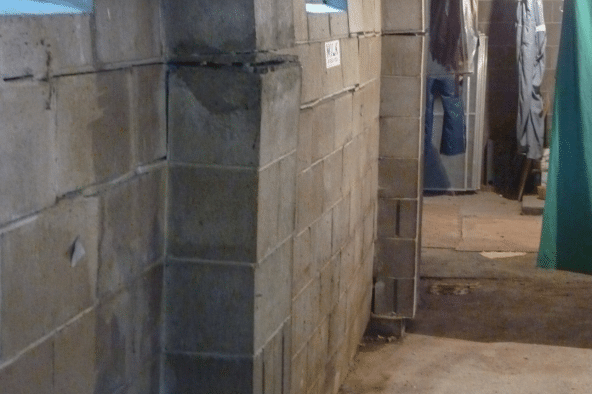
A bowed wall does not always develop as one obvious curve. Some foundation walls move inward near the center, while others begin shifting along a horizontal crack or show stair-step cracking through mortar joints.
Common signs of foundation wall movement include:
- Horizontal cracks across a basement wall
- Stair-step cracks in block or masonry walls
- A visible inward curve or bulge
- A wall that appears to lean inward
- Separation near the top or corners of the wall
- Cracks that continue to widen
- Water entering through newly developed wall cracks
A crack alone does not tell us how serious the problem is. The crack pattern, direction of movement, wall construction, moisture conditions, and amount of displacement all help determine what type of repair may be needed.

What Causes Basement Walls to Bow?
Basement walls hold back thousands of pounds of soil around your home. When pressure against the outside of the wall becomes greater than the wall can resist, the foundation can gradually begin moving inward.
Several conditions can contribute to that pressure:
Water-Saturated Soil
Soil becomes heavier when it absorbs water. Poor grading, short downspouts, clogged gutters, or drainage problems can allow additional water to collect near the foundation and increase the pressure against basement walls.
Soil Conditions
Soils throughout Northern Indiana vary considerably from one property to another. Some soils retain more moisture or change more noticeably as moisture levels rise and fall, which can increase pressure around a basement foundation.
Freeze and Thaw Cycles
Northern Indiana winters create another source of seasonal soil movement. Moisture in the ground can freeze, expand, and later thaw, repeatedly changing conditions around the foundation.
Backfill and Construction Conditions
The soil placed around a foundation during construction can also affect how pressure develops over time. Wall thickness, reinforcement, foundation material, and the way the surrounding soil was compacted all play a role in how a basement wall responds.
Usually, there is not one simple cause. That is why we look at both the wall and the conditions surrounding the home before recommending stabilization.

When Should a Bowed Foundation Wall Be Evaluated?
Small cracks and minor irregularities can exist in a basement for years without changing significantly. The concern increases when you begin noticing new movement or several symptoms developing together.
Schedule an evaluation if a basement wall appears to be moving inward, a horizontal crack is widening, or doors, floors, and other parts of the home begin changing along with the foundation wall. Movement that becomes more noticeable after heavy rain or seasonal changes is also worth investigating. The sooner the cause is understood, the more repair options may be available.
Can a Bowed Basement Wall Be Repaired?
Many bowed basement walls can be stabilized without removing and rebuilding the entire foundation wall. The appropriate repair depends on the wall material, amount of movement, crack pattern, access around the foundation, and forces causing the wall to move.
For many homes, A&M uses the SafeBasements Wall Anchor System to stabilize the foundation wall and resist further inward movement. When conditions allow, the system may also be adjusted gradually to help move the wall closer to its original position.
The important part is choosing the repair based on the condition of the wall rather than assuming every crack or bow requires the same solution.
SafeBasements Wall Anchors for Bowed Wall Repair
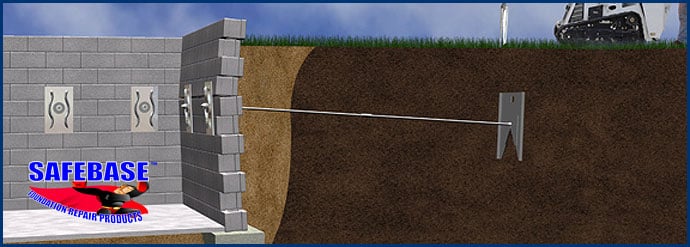
Wall anchors work by connecting the basement wall to stable soil located away from the foundation. Instead of simply covering a crack or reinforcing the surface of the wall, the system helps resist the soil pressure pushing the foundation inward.
The SafeBasements Wall Anchor System uses a steel earth anchor installed in stable soil outside the foundation and a steel plate mounted to the inside of the basement wall. A high-strength steel rod connects the two components and creates the resistance needed to stabilize the wall.
Wall anchors can be a good option for bowed, leaning, or shifting basement walls when there is enough exterior access to properly install the system.
How Wall Anchors Work
The wall is evaluated
Our team examines the amount and direction of movement, crack patterns, wall construction, and conditions around the foundation.
An earth anchor is installed
A steel anchor is positioned in stable soil away from the foundation wall.
A wall plate is installed inside
A low-profile steel plate is placed against the affected section of the basement wall.
The system is connected and tightened
A steel rod connects the wall plate to the earth anchor, allowing the system to stabilize the wall against additional inward movement.
Installation requires limited excavation compared with removing and rebuilding a foundation wall.
Stabilizing a Wall Is Different From Straightening It
One common misconception is that installing wall anchors immediately returns a bowed wall to a perfectly straight position. The first goal of the repair is usually stabilization, which means preventing the wall from continuing to move inward.
Depending on the wall, soil conditions, and amount of movement, the anchor system may be tightened over time to gradually improve the wall’s position. Trying to force an older foundation wall back into place too quickly can create additional problems, so any adjustment should be based on the condition of the structure. We will explain what can reasonably be expected from the repair before the system is installed.
Stabilizing a Wall Is Different From Straightening It
One common misconception is that installing wall anchors immediately returns a bowed wall to a perfectly straight position. The first goal of the repair is usually stabilization, which means preventing the wall from continuing to move inward.
Depending on the wall, soil conditions, and amount of movement, the anchor system may be tightened over time to gradually improve the wall’s position. Trying to force an older foundation wall back into place too quickly can create additional problems, so any adjustment should be based on the condition of the structure. We will explain what can reasonably be expected from the repair before the system is installed.
Schedule Your Free Bowed Wall Repair Estimate
Ignoring a bowed foundation wall can lead to collapse, costly reconstruction, and major safety hazards. Our wall anchor systems provide a permanent fix without tearing down walls or excavating your entire yard.
Call us today at 574-349-6185 or click the button below to schedule your free consultation with our experts!