
What Causes Bowed Basement Walls
Bowed or bulging basement walls aren’t just cosmetic issues—they’re signs of real structural strain. In areas like Plymouth, Fort Wayne, South Bend, and Granger, Indiana, expansive soils, hydrostatic pressure, and freeze-thaw cycles can all contribute to this foundation concern. At A&M Waterproofing & Foundation Repair, we specialize in stabilizing and restoring bowed walls before the damage becomes dangerous—or more expensive to fix.
What Causes Bowed Basement Walls?
Your basement walls are constantly under pressure—especially in climates like Indiana’s, where soil conditions and precipitation levels fluctuate drastically throughout the year. Here’s what typically causes walls to bow:
- Expansive Clay Soils – As clay-rich soils absorb water, they expand and push laterally on your foundation walls. Over time, this pressure causes inward bowing or bulging.
- Hydrostatic Pressure – After heavy rainfall or snowmelt, groundwater accumulates around your foundation. The resulting pressure can strain walls beyond their design capacity.
- Poor Drainage or Gutter Placement – Downspouts that dump water near your home’s perimeter can saturate the soil, increasing wall pressure.
- Freeze-Thaw Cycles – In the winter, saturated soil expands when frozen. When it thaws, it contracts, placing repeating stress on basement walls.
- Lack of Reinforcement in Older Homes – Homes built before reinforced concrete became common may be more vulnerable to lateral pressure and shifting.
If left untreated, bowed walls can crack, leak, or in severe cases, collapse.
Warning Signs of Bowed Walls
Not sure if you’re dealing with a bowed wall? Keep an eye out for these common red flags:
- Inward bowing or curving along the middle of the basement wall
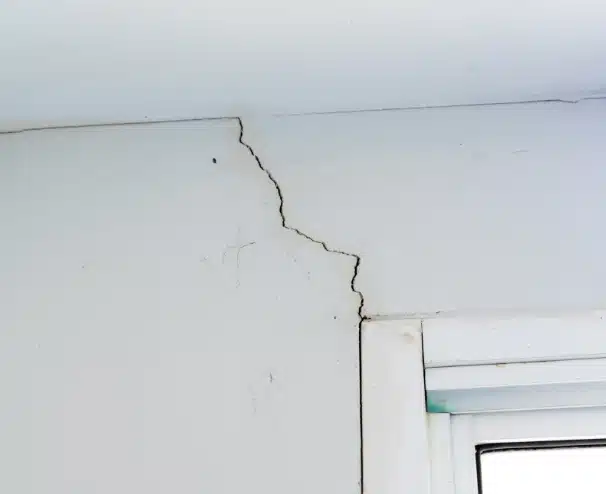
- Horizontal or stair-step cracks in block walls
- Water seepage through cracks or at wall joints
- Gaps between the wall and floor or ceiling
- Uneven or sloping basement floors
- Windows or doors sticking due to foundation movement
Early detection is key—catching the issue before it worsens saves both money and structural integrity.
How A&M Repairs Bowed Basement Walls
We offer multiple professional repair methods tailored to the severity of the bowing, your wall type (block, poured concrete), and soil conditions.
1. Wall Anchors
For moderate to severe bowing, we install galvanized steel wall anchors. These include interior wall plates and exterior earth anchors that work together to pull the wall back and prevent future movement. They’re ideal for large walls with visible inward deflection.
2. Carbon Fiber Straps
For minor bowing or early-stage pressure damage, carbon fiber straps are a cost-effective, minimally invasive solution. These ultra-strong strips are bonded to the wall surface and hold it in place to prevent worsening.
3. Steel I-Beams
Also known as H-beams, these heavy-duty vertical braces are anchored between the basement floor and the ceiling joists. I-beams are best for long walls experiencing significant bowing where excavation isn’t possible.
No matter the solution, our repairs are designed for long-term performance and are backed by our expert team and trusted reputation throughout Central Indiana.
Why Choose A&M for Bowed Wall Repair?
We’re not just here to fix the problem—we’re here to solve the cause. A&M Waterproofing & Foundation Repair brings over a decade of experience in diagnosing and resolving foundation issues specific to Indiana homes. Our services always begin with a detailed inspection and consultation, ensuring you understand your options and get the right fix the first time.
Schedule a Free Inspection Today
If you’ve noticed cracks, bowed walls, or other foundation red flags, don’t wait. Contact A&M Waterproofing & Foundation Repair for a no-pressure consultation. We proudly serve Plymouth, Fort Wayne, Granger, South Bend, and nearby areas.
Call our team at 574-349-6185 or click the button below to schedule a free estimate.