
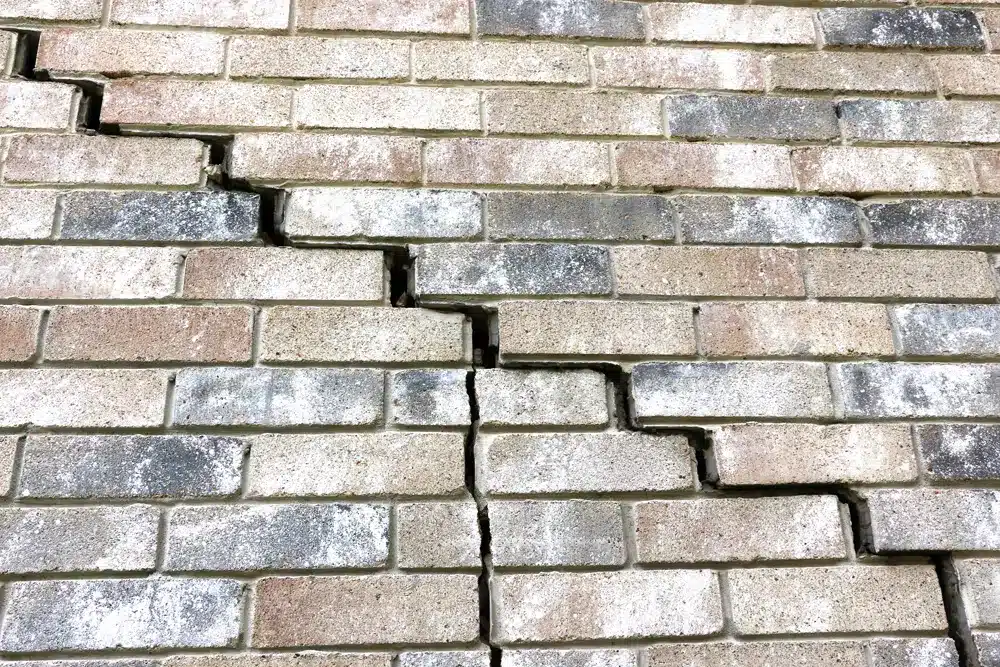
Are Stair-Step Cracks Serious? What They Could Mean for Your Foundation

One of the most common reasons homeowners call us for a foundation inspection is because they've noticed a crack zigzagging through the mortar joints of their brick. It may be on the corner of the garage, across the front of the house, or running up the side of a chimney. For many homeowners, it's something they don't notice until one day it suddenly catches their attention.
The first question is almost always the same.
"Is this something I should be worried about?"
After inspecting homes throughout Northern Indiana for years, we've learned that a stair-step crack is a symptom, not a diagnosis. Some cracks are simply the result of normal settling and remain unchanged for decades. Others are signs that part of the home's foundation is actively moving. The difference isn't determined by the crack alone. It's determined by understanding why that crack formed in the first place.
What Is a Stair-Step Crack?
A stair-step crack follows the mortar joints between bricks or concrete blocks, creating the familiar staircase pattern that gives it its name. Because mortar is typically weaker than the surrounding brick, it’s often the first place movement becomes visible when a home begins to settle or shift.
These cracks commonly appear on brick veneer, block foundation cracks, garage walls, chimneys, and around windows or doors. Although homeowners often feel like the crack appeared overnight, that’s rarely the case. More often, the movement has been happening slowly over time until it finally becomes noticeable.
What Causes Stair-Step Cracks?
One thing we’ve learned after completing hundreds of foundation inspections is that homeowners often look for one event to explain the crack. They may point to the last heavy rainstorm, a particularly cold winter, or assume the house is simply getting old. In reality, foundation movement usually develops over years rather than days.
Several conditions can contribute to stair-step cracking, including normal settlement, changing soil conditions, poor drainage, freeze-thaw cycles, and differential settlement where one portion of the foundation moves more than another. Throughout Northern Indiana, expansive clay soils also play a significant role. These soils expand when they’re saturated with water and shrink as they dry out, creating repeated movement beneath the foundation season after season.
By the time a stair-step crack appears, the conditions causing that movement have often been affecting the home for quite some time.
When Are Stair-Step Cracks More Serious?
A stair-step crack becomes more concerning when it isn’t the only sign that something is changing. During an inspection, we’re looking at the entire home, not just the crack itself. If the crack is becoming wider, shows signs of horizontal movement, or is accompanied by sticking doors and windows, sloping floors, gaps around trim, or additional cracks appearing throughout the home, there’s a greater chance that active foundation movement is occurring.
One thing we’ve learned is that homeowners sometimes focus on the largest crack they can see. Surprisingly, the largest crack isn’t always the one we’re most concerned about. We’ve inspected homes where a wide crack had remained stable for years, while a much smaller crack revealed ongoing settlement that required attention. That’s why we evaluate every symptom together instead of judging a foundation by one visible crack. Learn morea bout the different types of foundation cracks and when to worry here.
When Are Stair-Step Cracks Usually Less Concerning?
Not every stair-step crack requires foundation repair.
It’s common for us to inspect homes where a small crack has remained virtually unchanged for many years. If the crack is narrow, shows no signs of recent movement, and isn’t accompanied by moisture problems, uneven floors, or sticking doors and windows, monitoring the condition may be the most appropriate recommendation.
That doesn’t mean it should be ignored. We still encourage homeowners to keep an eye on the crack, take photographs over time, and schedule an inspection if they notice any changes. Monitoring is often just as valuable as immediate repair because it helps determine whether the foundation has stabilized or is continuing to move.
How We Determine Whether a Crack Needs Repair
One thing that often surprises homeowners is that we don’t begin an inspection by deciding how to repair the crack.
Instead, we begin by understanding the home.
We evaluate the grading around the property, look at how gutters and downspouts manage roof runoff, inspect the soil conditions, and look for areas where water may be collecting near the foundation. Inside the home, we’re checking floor elevations, looking for additional signs of movement, evaluating foundation walls, and determining whether the crack appears active or stable.
This process is important because two homes with nearly identical stair-step cracks can require completely different recommendations. One may simply need improved drainage and continued monitoring, while another may require structural repairs. Without understanding the cause of the movement, it’s impossible to recommend the right solution.
Repairing the Cause Instead of the Symptom
If foundation repairs are necessary, the goal should always be to address what’s causing the movement rather than simply covering the crack.
Depending on what we find during the inspection, recommendations may include improving drainage around the home, repairing foundation cracks, stabilizing a wall, or installing foundation pier systems if settlement is occurring. Every repair should match the conditions affecting that specific property instead of assuming every crack requires the same solution.
One of the most valuable things a homeowner can gain from a professional inspection is confidence that the recommended repair is based on the actual problem rather than the appearance of the crack. One of the biggest lessons we’ve learned after inspecting homes throughout Northern Indiana is that stair-step cracks rarely tell the entire story.
We’ve evaluated homes where the visible crack wasn’t actually the biggest concern. Instead, poor drainage, changing soil moisture, or settlement on another side of the home explained why the crack developed in the first place. That’s why our inspections always include the entire property instead of focusing on one wall or one symptom.
Understanding how the home has moved, how water behaves around the foundation, and whether those conditions are still changing allows us to recommend repairs only when they’re truly needed. In many cases, homeowners are relieved to learn that the crack they’re worried about has remained stable. In others, identifying active movement early allows repairs to be completed before more significant structural damage develops.
Final Thoughts
Seeing a stair-step crack in your brick or foundation can be unsettling, but it doesn’t automatically mean your home has a serious structural problem. Some cracks are simply part of a home’s natural settling process, while others indicate movement that deserves closer attention.
The most important step is determining why the crack formed. By evaluating the foundation, drainage, surrounding soil, and other signs throughout the home, it’s possible to distinguish between a stable cosmetic crack and one that’s signaling a larger issue. That understanding allows homeowners to make informed decisions and address problems before they become more extensive.
Contact A&M Waterproofing & Foundation Repair
If you’ve noticed stair-step cracks in your brick veneer, foundation wall, garage, or chimney, we can help you understand what they mean.
Our team provides thorough foundation inspections throughout Northern Indiana, taking the time to evaluate your home’s structure, drainage, and soil conditions before recommending any repairs. Whether your foundation simply needs to be monitored or requires structural stabilization, we’ll help you understand the cause of the problem and the best path forward.
Contact us today to schedule your professional foundation inspection.