
Foundation Cracks in Indiana: What They Mean and When to Worry
Have you started to see new cracks in your basement walls, garage slab, or along the outside of your home and wondered if they are normal? Many homeowners in Central and Northern Indiana ask the same question. Some cracks are mostly cosmetic. Others are early warning signs of foundation settlement or structural issues that should not be ignored.
At A&M Waterproofing & Foundation Repair, we inspect and repair foundations in communities like Fort Wayne, South Bend, Plymouth, Granger, and the surrounding areas. Not every crack is an emergency, but every crack is worth understanding. Knowing what you are looking at is the first step in protecting your home.
In this guide, we explain:
- Why foundation cracks are common in Indiana
- The different types of cracks and what they can mean
- When it is safe to monitor and when it is time to call a professional

Why Foundation Cracks Are Common in Indiana
Homes in Indiana are built on a mix of clay, loam, and fill soils that respond strongly to moisture and temperature changes. When soil gets wet, it can swell. When it dries out, it shrinks and pulls away from the foundation. Over time this movement puts stress on concrete and masonry.
Common factors that contribute to cracking include:
- Expansive or clay rich soils that shrink and swell with the weather
- Heavy spring rains and snowmelt that saturate the ground
- Summer droughts that dry and shrink the soil beneath footings
- Poor grading or short downspouts that dump water near the foundation
- Normal curing and shrinkage of concrete in newer homes
Whether you live in an older home in South Bend or Fort Wayne, or a newer subdivision near Plymouth or Granger, you can see cracking caused by soil movement and foundation settlement.

Types of Foundation Cracks and What They Can Indicate
The direction, size, and location of a crack all help tell the story of what is going on with your foundation.
1. Wall and Ceiling Cracks
What they look like:
- Very thin, hairline cracks in poured concrete walls or floors
- Often vertical or slightly diagonal
- Common in newer homes during the first few years
What they usually mean:
These are often related to normal concrete curing and shrinkage. On their own they are usually not structural. However, they can allow moisture to seep through and may worsen if other problems, like drainage issues, are present.
When to be concerned:
- You see water seeping through the crack after heavy rain
- The crack slowly widens or spreads over time
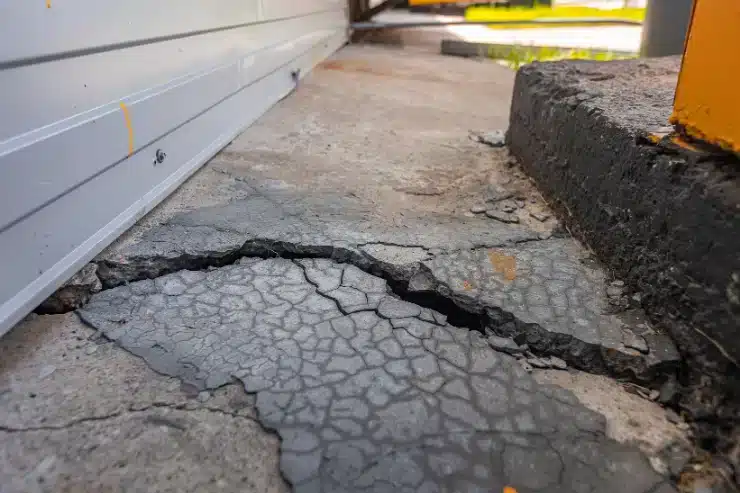
2. Vertical Cracks
What they look like:
- Cracks that run straight or mostly straight up and down
- Found in poured concrete or block foundation walls
- May start small and become wider
What they may mean:
Vertical cracks can result from minor settlement or shrinkage. If they are isolated and narrow, they may not indicate severe movement. If they are widening or appear in several areas, they can be a sign of differential settlement, where one section of the foundation is moving more than another.
When to worry:
- The crack is wider than the thickness of a nickel
- You notice it getting bigger or longer
- It allows water to leak into the basement or crawl space
3. Diagonal Cracks
What they look like:
- Cracks that run at an angle, often from the corners of windows, doors, or foundation openings
- Sometimes wider at one end than the other
What they may mean:
Diagonal cracks are often associated with uneven foundation settlement. In finished areas you might see diagonal cracks in drywall above doorways paired with doors that stick, which is another sign that the structure is moving.
When to worry:
- The crack is noticeably wider at one end
- You also have sloping floors, sticking doors, or gaps at trim
- New diagonal cracks appear in a short amount of time
4. Stair-Step Cracks in Brick or Block
What they look like:
- Cracks that follow the mortar joints in a step pattern
- Common in brick veneer and concrete block foundation walls
What they may mean:
Stair-step cracks are a classic indicator of foundation settlement and movement. When your foundation shifts, rigid masonry responds by cracking along the weakest path, which is the mortar joints.
When to worry:
- The cracks are getting longer or wider
- Parts of the wall appear to be bowing, bulging, or shifting
- You see stair-step cracking on more than one side of the house
If you own an older brick home or block foundation home in Indiana, stair-step cracks are a very important sign that should be evaluated.
5. Horizontal Cracks
What they look like:
- Cracks running sideways along a foundation wall
- Often appear mid-height in block or poured concrete walls
What they may mean:
Horizontal cracks often come from lateral soil pressure pushing against the wall. In our climate, saturated soil, poor drainage, and freeze thaw cycles can all contribute to this pressure. Over time this can lead to bowing or leaning walls and serious structural issues if not addressed.
When to worry:
Horizontal cracks are considered serious because they often indicate that the wall is being pushed inward. If you can see visible inward movement or bowing along with the crack, you should have the wall evaluated as soon as possible.
When Are Foundation Cracks Mostly Cosmetic?
Some cracks are more about appearance than structure, especially when:
They are very narrow and not growing
They are only in interior drywall or plaster with no signs of foundation cracking behind them
They do not leak or show moisture staining
Even then, it is smart to keep track. Take photos, write down dates, and check periodically for changes in width or length.
When Cracks Mean It Is Time To Call A&M Waterproofing
You should schedule a professional foundation inspection if you notice:
- Cracks that are getting wider or longer
- Cracks wider than about one eighth of an inch
- Cracks that let water seep into the basement or crawl space
- Multiple new cracks appearing in different areas of the home
- Cracks combined with other warning signs, such as:
- Doors or windows that suddenly stick or do not latch
- Floors that feel uneven or sloped
- Gaps between walls and ceilings or baseboards
- A chimney that looks like it is tilting away from the house
These symptoms often indicate active foundation settlement or soil movement, not just cosmetic aging.
How A&M Waterproofing & Foundation Repair Can Help
At A&M Waterproofing, we do more than cover up cracks. We look for the underlying cause and recommend solutions that address both structure and water.
Depending on what we find, we may recommend:
- Foundation crack repair and sealing to block water intrusion
- Interior or exterior waterproofing systems to manage groundwater
- Sump pump and drainage improvements to relieve hydrostatic pressure
- Structural repair solutions to stabilize settling or shifting foundations
Our team understands how Indiana soils and weather affect foundations, and we design repairs that are meant to last.
Worried About Foundation Cracks? Start With an Inspection.
If you have noticed new or worsening foundation cracks in your Indiana home, do not wait and hope they go away. Early evaluation can help you avoid more serious damage and higher repair costs later.
A&M Waterproofing & Foundation Repair offers honest, professional foundation and waterproofing inspections. We will explain what your cracks mean, whether you should be concerned, and the options available to protect your home. Contact A&M Waterproofing today to schedule your foundation evaluation and take the first step toward a safer, drier, and more stable home.