
When Does a Foundation Crack Need Piers Instead of Crack Repair?
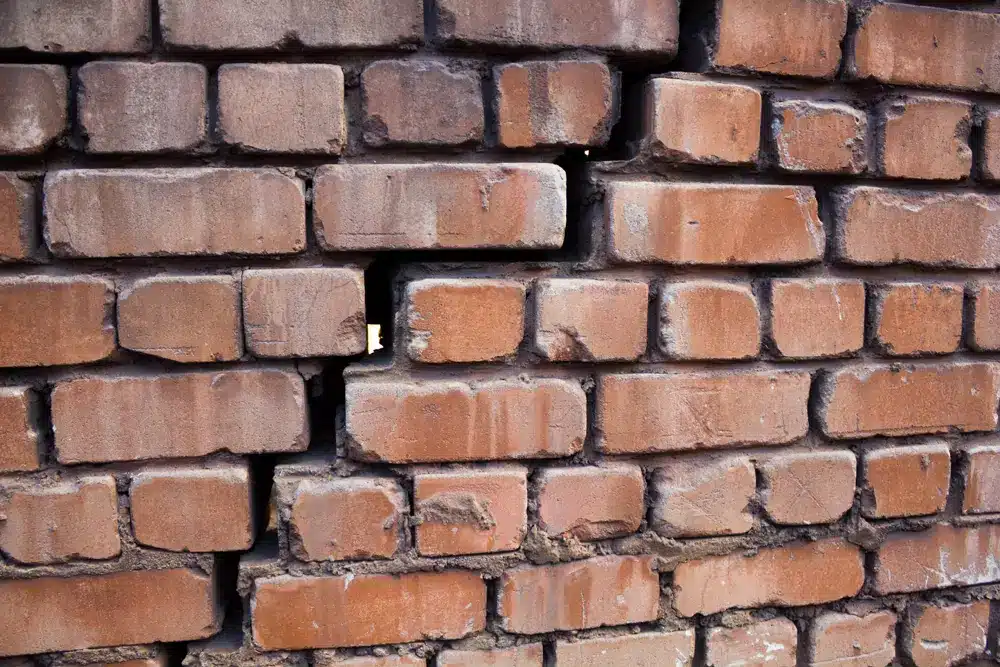
A foundation crack does not automatically mean your home needs piers. We see cracks that are stable and appropriate for a focused repair, and we see similar-looking cracks that are only one symptom of a larger settlement problem. The difference comes from what the rest of the house is doing, not from how the crack looks by itself.
When we evaluate a crack, we are trying to answer two different questions. Does the crack itself need to be repaired, or has part of the foundation lost reliable support and continued to move? Our foundation crack repair service addresses the crack when that is the real problem, while foundation settlement repair is aimed at supporting a section of the structure that is actually settling.
A Crack Does Not Automatically Mean the Foundation Needs Piers
Concrete and masonry can crack for several reasons. Poured concrete can develop shrinkage cracks as it cures, and an older foundation can carry a stable crack that has looked the same for years. A crack can also become a pathway for water even when the wall or footing is not actively moving.
Those are very different conditions from differential settlement, where one section of the foundation moves more than another. In that situation, the visible crack may be a result of the movement rather than the main problem. Filling the crack can improve the surface or stop a localized leak, but it will not restore support beneath a footing that is continuing to settle.
That is why our team does not use a specific crack-width rule that automatically triggers piers. We look at the crack pattern, the foundation around it, the floor elevations, the exterior masonry, doors and windows, and the history of the problem before we recommend structural work.
What Makes Us Suspect Settlement Instead of an Isolated Crack
Settlement becomes more likely when several symptoms line up in the same part of the house. A stair-step crack in brick or block matters more when the floor above that corner is low, a nearby door recently stopped latching, or a repaired crack has opened again. The pattern across the structure gives us more information than the crack alone.
Our experts also pay attention to direction and displacement. A diagonal or stair-step crack near a low corner can point us toward uneven movement, while a horizontal crack in a basement wall may lead us toward wall pressure instead of downward settlement. If the floor slopes through the middle of the house rather than toward the perimeter, we may need to inspect framing and interior supports before blaming the foundation.
Northern Indiana moisture conditions can influence the soil around a home, but we do not assume every crack comes from the same soil problem. Our article on what causes foundation settlement in Indiana soils explains how wet and dry cycles, drainage, erosion, and fill conditions can affect support beneath a foundation. The individual property still has to be evaluated on its own.
| What We Find | What It May Point Toward |
|---|---|
| One stable poured-wall crack with no other movement | Crack repair or monitoring may be enough. |
| Stair-step crack plus a low floor or sticking door | Foundation settlement becomes more likely. |
| Horizontal crack plus inward wall movement | Bowed-wall stabilization may be the real structural issue. |
| Crack that repeatedly reopens after patching | Ongoing movement should be evaluated before another surface repair. |
| Water through a stable crack | Crack repair may be appropriate, but drainage conditions should still be checked. |
| Multiple symptoms concentrated in one corner | A broader foundation evaluation is warranted before choosing the repair. |
Why Repaired Cracks Sometimes Reopen
A repaired crack can reopen for more than one reason. The original repair may have been superficial, the material may not have been appropriate for the crack, or the foundation may have continued moving after the repair was made. We care most about that last possibility because another patch will not stop settlement underneath the wall.
If a crack was repaired years ago and has remained unchanged, that history can actually be reassuring. If it opens again, gets longer, or is joined by new symptoms in the same area, we want to know when those changes happened. Photos, old inspection reports, and previous repair records can help us establish whether the condition appears active or stable.
A reopened crack still does not automatically mean piers. It means the crack deserves a structural evaluation before someone simply seals it again.
What Foundation Piers Actually Fix
Foundation piers are used when a section of the foundation needs a more reliable source of support than the soil currently providing it. The repair transfers the load of the affected foundation to deeper or more dependable bearing through a designed pier system.
That distinction is important because the visible crack may remain after the structural work. Stabilizing the foundation can address the movement that created the crack, but masonry, drywall, or concrete may still need separate cosmetic or crack repair afterward. We also do not promise that every settled area should or can be lifted back to its original elevation.
The pier system itself is only chosen after we determine that settlement is the problem. Our foundation repair services include several types of structural repairs because not every crack, wall, or settlement pattern should be treated the same way.
What We Measure Before Recommending Piers
When we inspect a home for possible settlement, we compare the crack to the rest of the structure. Floor elevations can show whether one part of the house is lower, exterior masonry can show where movement is concentrated, and doors or windows can help us see whether openings are changing with the structure. We also look at additions, garages, drainage, previous repairs, and the condition of the foundation walls.
We are looking for agreement between the evidence. If the crack pattern, floor elevations, exterior movement, and homeowner history all point toward the same section of foundation, we have a much stronger reason to consider stabilization. If those signs do not line up, we keep looking before recommending piers.
Water can be part of the story without being the whole story. Poor drainage can soften or erode supporting soil, while a separate basement water problem may simply be using an existing crack as an entry point. That is why our basement waterproofing inspections and foundation evaluations often overlap when a home has both water and structural symptoms.
When Crack Repair Alone May Be the Better Recommendation
If a poured-concrete crack appears stable, the surrounding foundation is not showing movement, floor elevations do not point to settlement, and the problem is limited to the crack itself, a focused repair may be the right answer. We would rather recommend that smaller repair than install structural support the evidence does not justify.
The same is true when a crack is old and unchanged. Monitoring may make more sense than repairing something simply because it exists, especially when the crack is dry and there are no signs of active movement. The decision should follow what the house is doing now.
If you have a foundation crack that is widening, reopening, leaking, or showing up alongside uneven floors, sticking doors, masonry movement, or other changes, contact A&M Waterproofing & Foundation Repair for an evaluation. We can determine whether the crack itself needs attention, whether settlement is involved, and what level of repair actually makes sense for your Northern Indiana home.